The academic year in Kazakhstan sets clear deadlines for doctoral candidates, doctors and grant participants. A publication prepared in advance removes the risk of missing these deadlines.
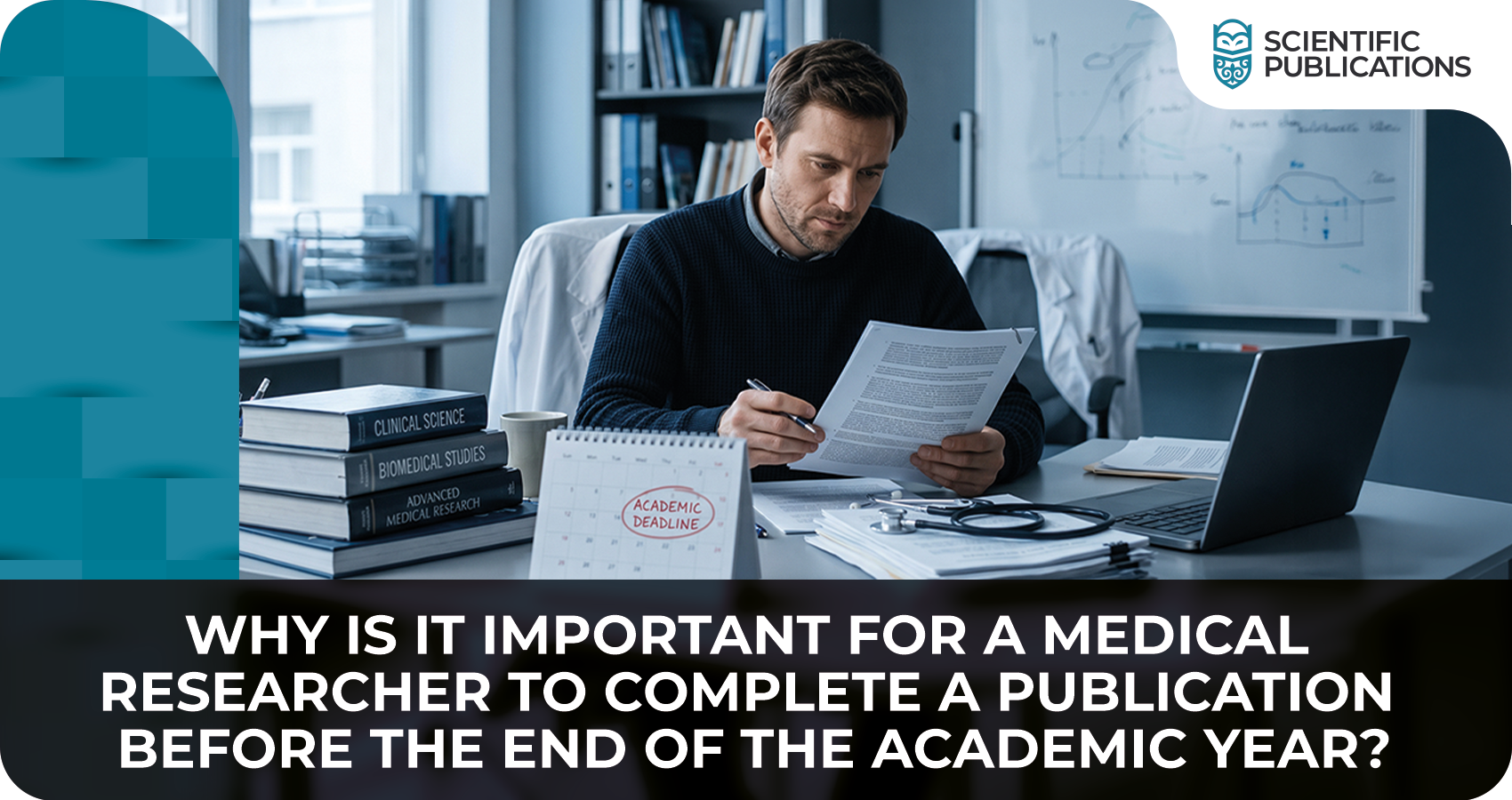
Why publication deadlines matter so much for a medical scientist
The academic year shapes not only the teaching timetable but also the checkpoints of scientific work. For a PhD candidate, a practising doctor or a grant participant, these checkpoints often coincide with a requirement to confirm publication activity. If an article is still under review, the formal obligation may remain unmet. This applies not only to doctoral candidates but also to doctors combining clinical practice with research.
The academic year of a PhD candidate and mandatory publications
PhD study in Kazakhstan lasts at least three years and is divided into academic years with two semesters. To be admitted to the defence, a doctoral candidate must meet the Rules for the Award of Degrees – at least one article or review in an internationally peer-reviewed journal with a CiteScore percentile of 25 or above in Scopus, or indexed in the Web of Science Core Collection, together with publications in journals from the KOKSNVO list. The number of the latter depends on the category of the journal.
How does a doctoral candidate's annual assessment relate to publications?
At the end of each academic year, a doctoral candidate undergoes an academic assessment, which reviews progress against the individual work plan. Publications set out in the plan are among the indicators checked. Missing an article by the time of the assessment may affect continued study under the grant.
Publications and confirming a doctor's qualification level
The requirement for publication activity also applies to practising doctors outside doctoral study. Since 2021, the former qualification category system has operated within the Sectoral Qualifications Framework: to be awarded or to confirm a qualification level, a specialist needs to accumulate at least 210 credit units of continuing professional development (CPD) over five years. A scientific publication is one way to cover part of this requirement – an article in a journal from the KOKSNVO list is worth 20 credit units, while an article in a journal indexed in Scopus or Web of Science is worth between 90 and 180, depending on the quartile.
How long does peer review take for a medical article?
The average review time in Q3 and Q4 journals is between two and six months, and usually longer in journals with a higher quartile. This range means that submitting an article in the final weeks of the academic year reduces the chances of completing peer review by the required deadline. A time buffer also allows for revisions in response to reviewers' comments.
For competitively funded research projects, the reporting period is often also tied to the academic year, and a completed publication is among the expected outcomes.
The need to complete a publication before the end of the academic year is relevant for:
- PhD candidates undergoing annual academic assessment
- doctors accumulating credit units to confirm their qualification level
- participants in research grants with reporting tied to the academic year
- medical university lecturers combining clinical and academic work
How a medical scientist can plan a publication before the end of the academic year
A sequence of several steps helps in planning an article well in advance.
- Determine the type and number of publications required for your situation.
- Choose a journal based on its scope and expected review times.
- Prepare the manuscript well in advance, leaving room for revisions.
- Track the status of the review and respond promptly to reviewers' comments.
Preparing a publication before the end of the academic year helps a medical scientist meet the requirements of doctoral study, qualification assessment or grant reporting without last-minute pressure. Given how long peer review can take, it is worth starting work on an article well ahead of time rather than leaving it until the reporting period.
Need help with publishing a scientific article? Specialists at Scientific Publications will help select a suitable journal, check compliance with requirements, and support you at every stage of the publication process. To receive a free consultation, fill in the form below, and our manager will contact you shortly. Onward to new scientific achievements!