


The publication of research articles is traditionally associated with the academic environment – universities and research institutes. In recent years, however, an interest in publication activity has been emerging ever more clearly on the part of medical organisations as well. This shift is connected with changes in the accreditation system, requirements for confirming the qualification level of healthcare workers, and the broader transformation of the healthcare system in Kazakhstan.
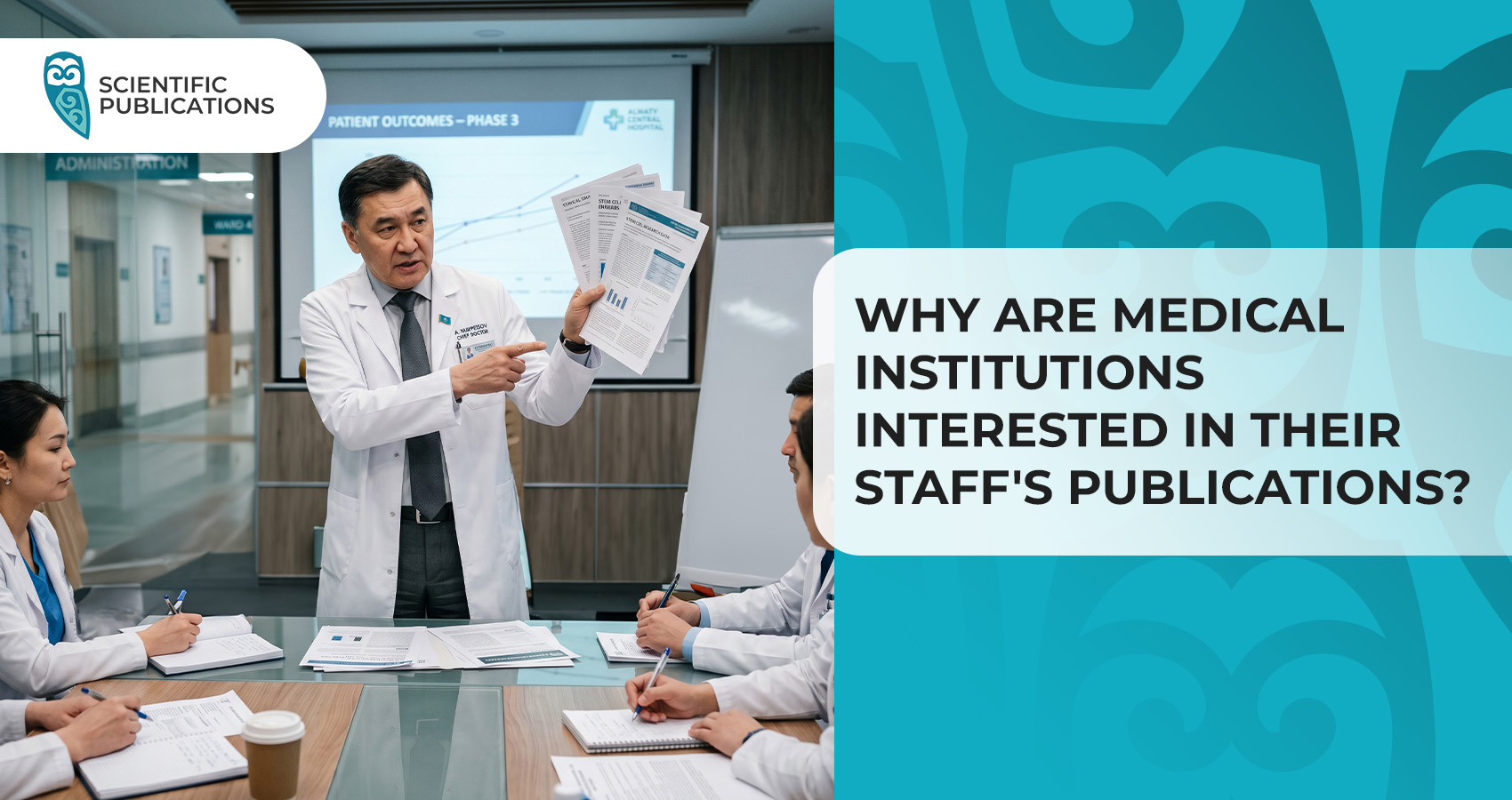
How do employees' publications affect a clinic's accreditation?
The accreditation of medical organisations in the Republic of Kazakhstan is a voluntary procedure carried out in accordance with national standards approved by the authorised body in the field of healthcare. Among the criteria by which an organisation is assessed, a particular place is occupied by indicators that reflect the scientific and personnel potential of the team. The publication activity of employees is treated as an indirect indicator of the institution's professional level and its engagement with the academic environment.
The standards usually take the following areas into account:
- the personnel composition of the organisation and the qualifications of its specialists
- the participation of employees in research projects and clinical studies
- the development and implementation of clinical protocols and methodological guidelines
- the presence of a continuing professional development system
These parameters are considered in combination, so even moderate but systematic publication work by the team is capable of having a positive effect on the outcome of the procedure.
The link between publications and the assessment of medical workers' qualifications
A system for assigning and confirming qualification levels of healthcare workers is in operation in Kazakhstan, having replaced the former institution of qualification categories. In order to confirm or raise their level, a specialist is required to accumulate a set number of credit units through continuing professional development (CPD) activities, pass an assessment of professional preparedness, and confirm the performance of work functions corresponding to the relevant level.
Research publications are included in the list of documents that confirm a specialist's additional competencies and may influence the assessment in several respects:
- Confirmation of professional development and participation in academic activity.
- Demonstration of command of up-to-date diagnostic and treatment methods.
- Accumulation of CPD credit units through non-formal education.
- The build-up of a portfolio for the subsequent defence of a dissertation.
The greater the number of employees on a clinic's staff who are actively engaged in research work, the higher the overall professional level of the organisation. This factor carries weight when contracts are concluded with state and private purchasers of medical services.
The role of publications in shaping a clinic's rating
The rating of a medical organisation is shaped not only by the volume of care provided, but also by indicators reflecting the scientific potential of the team. Regular publication activity contributes to:
- the strengthening of professional reputation within the national and international community
- a rise in the citation rate of the clinic's specialists
- the expansion of educational and research partnerships
- a growing level of trust on the part of patients who pay attention to an institution's competencies
Taken together, these factors make the research work of employees part of a clinic's positioning strategy, rather than merely the individual initiative of particular specialists.
Publications as a condition for participating in grants and research
Access to grant funding and international clinical studies, as a rule, presupposes that the project leader and the team of researchers have a documented record of academic experience. The competitions held by the Science Committee of the MSHE RK (CSHES MSHE RK), as well as sectoral programmes run by the Ministry of Healthcare, include requirements regarding applicants' publication history – including the number of articles in Scopus and Web of Science journals, often with specific journal percentiles indicated.
In this context, employees' publications serve the following functions:
- They confirm the qualifications of the project leader and the research team.
- They form the basis for applications for competitive funding.
- They make it easier for a clinic to join international research consortia.
- They create the conditions for the subsequent implementation and commercialisation of results.
The presence of actively publishing specialists broadens the sources of extra-budgetary funding and the strategic opportunities available to the organisation.
The interest shown by medical institutions in their employees' publications is driven by a set of interconnected factors: accreditation requirements, the conditions for confirming specialists' qualification levels, the formation of ratings, and access to grants. Systematic support for research work within the team enables a clinic to strengthen its personnel potential, comply with sectoral regulations, and broaden its professional presence at both national and international level simultaneously.
Are you planning a research article in the field of medicine and unsure where to start? Please contact Scientific Publications: we will help you choose a suitable journal, verify its indexing status and provide support at every stage of the work. To arrange a free consultation, please fill in the form below – our manager will be in touch shortly. Onwards, to a successful publication!


