


A qualification category determines a teacher's professional status and level of pay, which is why attestation is treated with great care in Kazakhstan. In 2026 the attestation procedure is changing, while a good many questions still surround the international databases. Understanding what the order requires and what role Scopus plays helps a teacher plan their career without unnecessary expense or worry.
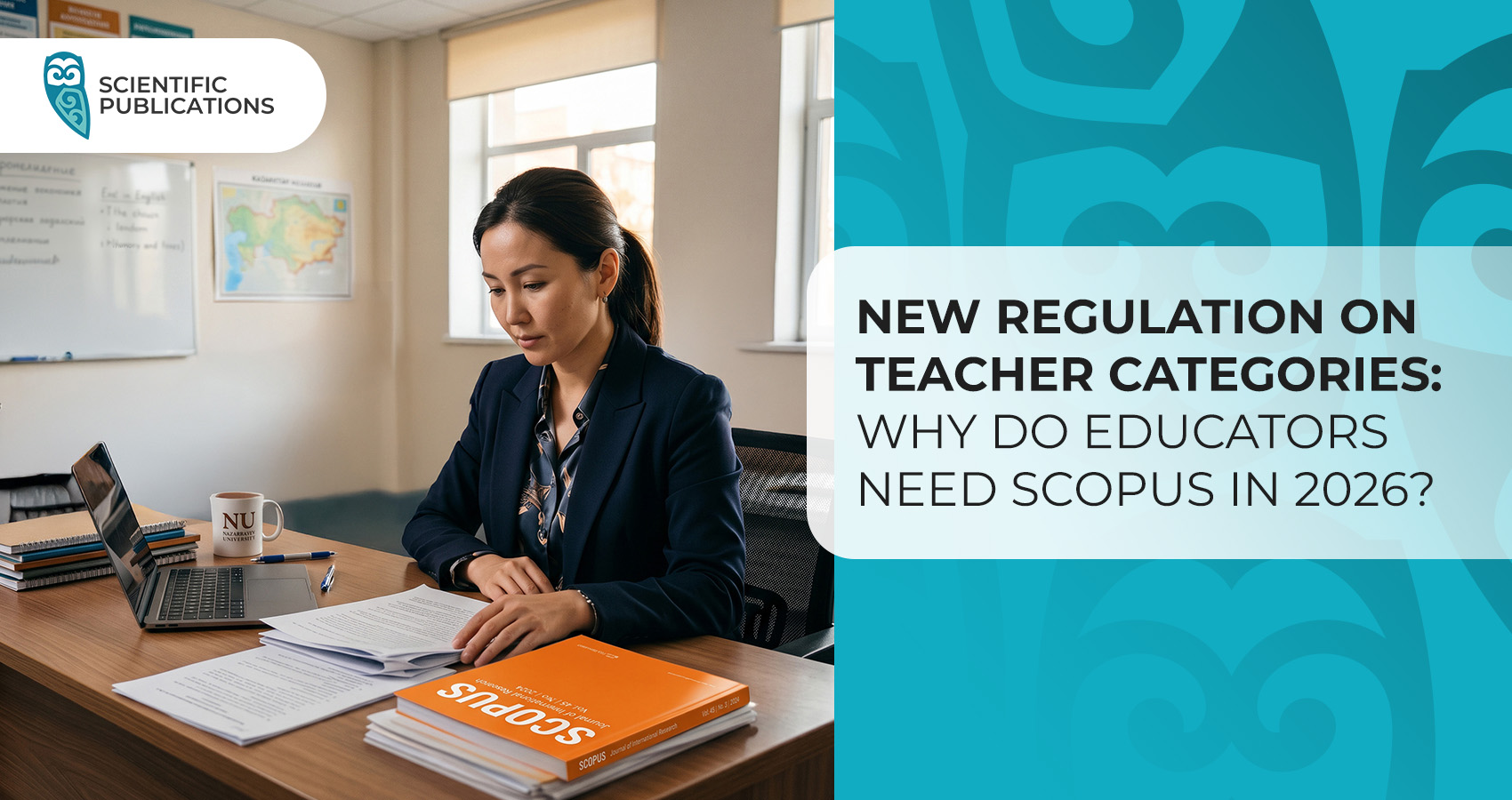
Changes in teacher attestation in 2026
Attestation in Kazakhstan is governed by “Order No. 83 of the Minister of Education and Science dated 27 January 2016” in its current version. In April 2026 the Ministry of Education announced a considerable simplification of the procedure. For most teachers, the requirements no longer include compulsory testing of subject knowledge, the writing of an essay, the publication of scientific articles or the development of original programmes. Assessment is shifting towards everyday work and genuine learning outcomes, while the gathering of information is moving to the national Ustaz platform.
The main areas of change are:
- the removal of compulsory subject-knowledge testing for most teachers
- the exclusion of the essay and the publication of scientific articles from attestation requirements
- the automatic collection of data about the teacher on the Ustaz platform
- the retention of testing for early-career teachers, school leaders and methodologists
Thus the publication burden within ordinary attestation is being reduced.
Order requirements for teachers and publications
The order provides for the categories of teacher-moderator, teacher-expert, teacher-researcher and teacher-master. The requirements attached to them relate to professional competencies, authored teaching and learning materials, participation in professional-skills competitions and the preparation of olympiad prize-winners.
For the teacher-master and teacher-researcher categories, the criteria include publications in periodicals recommended by the authorised body in the field of education. This refers to the list of periodicals maintained by the relevant department, rather than to the international databases.
Does a teacher need Scopus for a category?
The order contains no direct requirement for publications in Scopus or Web of Science for school categories. Indexing in the international databases belongs to a different level of academic activity – to academic degrees, university posts and the defence of dissertations. For the award or confirmation of a school teacher's category, such publications are in most cases not required.
An academic degree as a route to a teaching category
The order takes a teacher's research qualifications into account. Holding the degree of Candidate of Sciences, Doctor of Sciences or Doctor of Philosophy (PhD) provides grounds for awarding the teacher-moderator category without undergoing attestation. Where higher categories are awarded ahead of schedule, an academic degree combined with length of service is regarded as one of the significant criteria: for the teacher-researcher – with at least three years of service, and for the teacher-master – at least five years.
The link between research qualifications and a category can be set out as a sequence:
- The teacher prepares and publishes articles in Scopus or Web of Science journals.
- These publications become the grounds for defending a dissertation and being awarded a degree.
- The degree obtained is then taken into account when a qualification category is assigned.
Why does a teacher need a Scopus publication in 2026?
Admission to doctoral studies and the defence of a dissertation in Kazakhstan carry requirements for publication activity in periodicals indexed in Scopus or Web of Science. A teacher who is planning a research career or the award of a degree therefore turns to the international databases as a matter of course. Publications in Scopus also widen the opportunities to take part in grant programmes and enhance one's academic reputation.
Ultimately, Scopus is not a direct condition for the award of a school category, and in 2026 the publication requirements for ordinary attestation are being reduced. At the same time, for a teacher focused on an academic degree and research development, publications in the international databases retain their practical value. A considered choice of strategy, made with the current version of the order in mind, allows professional growth to be planned more effectively.
Are you planning a publication in Scopus or Web of Science? The specialists at Scientific Publications will select a suitable journal and help with editing your text, plagiarism checking and translating your article. To arrange a consultation, fill in the form below and our manager will contact you shortly. Onward to new scientific achievements!


